

Think back to your last golf lesson.
Your coach watched your swing.
Told you what they saw.
You hit a few more balls.
And you left hoping it would stick.
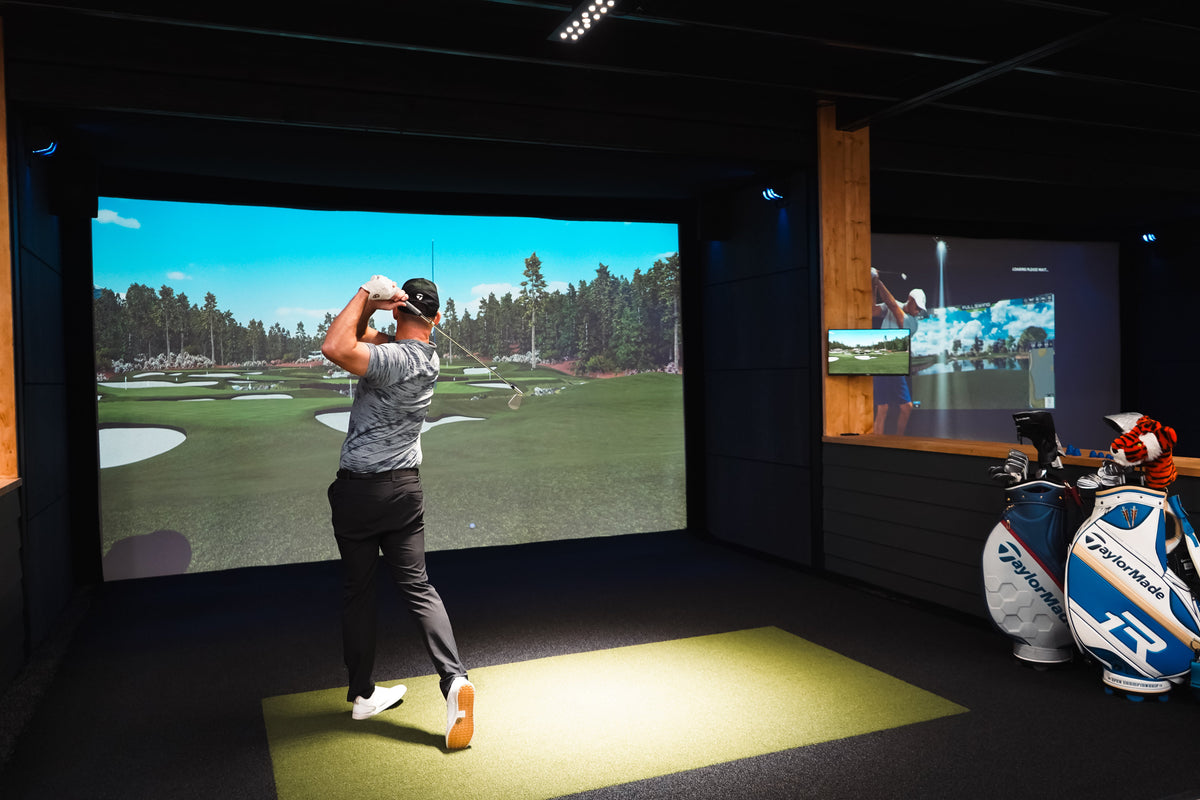
Now imagine the same lesson where every swing comes with precise data, and every shot’s full ball flight plays out in front of you.
That’s the difference a simulator makes.
And it’s why more PGA Professionals, including Chris Ryan, featured in this week’s video, are coaching on Full Swing.
The Problem With Traditional Lessons
Outdoor lessons have real value. But they also have limits:
- Weather: rain, wind and cold disrupt sessions
- Daylight: winter evenings cut lessons short
- Guesswork: without data, feedback relies on feel and eye
- Memory: it’s hard to compare this week’s swing with last month’s
The result? Slower progress, and fixes that don’t always last.
How Simulator Lessons Work
A simulator lesson combines a coach’s eye with objective data.
Every swing gives you:
- Instant club and ball data
- Full, visible ball flight on screen
- A clear link between the swing and the result
Your coach doesn’t just tell you what happened.
They show you.

Why Do Coaches Get Faster Results on a Simulator?
1. Faster Diagnosis
When the data and the ball flight are accurate, the cause of a miss becomes clear quickly.
- Is it face angle?
- Club path?
- Strike?
Less time guessing means more time fixing.
2. Instant Proof a Fix Is Working
Make a change, hit a shot, and see the result straight away.
- Did ball speed go up?
- Did the dispersion tighten?
- Did the start line improve?
That instant feedback builds confidence in the change.
3. Measurable Progress Over Time
With data on every swing, progress is easy to track:
- Compare sessions week to week
- See which numbers are improving
- Set clear, realistic goals
As Chris puts it in the video, accurate data means faster fixes and real, measurable progress.
4. Lessons in Any Weather
Rain, wind or dark evenings make no difference.
Lessons happen when they’re booked, not when the weather allows.
What to Look For in a Coaching Simulator
Not every simulator is suitable for serious coaching.
The essentials:
- Accurate data: if the numbers are wrong, so is the feedback
- Full ball flight: players need to see what the ball did
- Club and ball data together: to connect cause and effect
- Reliable realism: so changes indoors carry over to the course

Which Full Swing Setup Suits Coaching?
- Patented tri-tracking technology
- 4 HyperClear cameras plus the ION3 overhead camera
- Full ball flight from impact to landing
- Ideal for academies, studios and premium coaching spaces
Full Swing KIT launch monitor
- 16 points of club and ball data
- High-resolution video replay
- Works indoors and outdoors, at the range or in the studio
- £5,999 RRP
- A complete indoor setup in one package
- Available in 10ft and 12ft sizes

Getting the Most From a Simulator Lesson
If you’re booking lessons on a simulator:
- Arrive with one goal, such as fixing a slice or improving your strike
- Ask what the key number is for your fix
- Record your baseline at the start of the session
- Practise the same metric between lessons
- Compare progress at your next session
The Bottom Line
Great coaching has always been about seeing what’s really happening.
A simulator just makes it clearer.
Accurate data, full ball flight and instant feedback mean less guesswork, faster fixes and progress you can actually measure.
That’s why PGA Professionals like Chris Ryan trust Full Swing.
Can a Golf Simulator Really Improve Your Game?
More Than Golf: Why a Simulator Is the Ultimate Home Entertainment Space